Our story
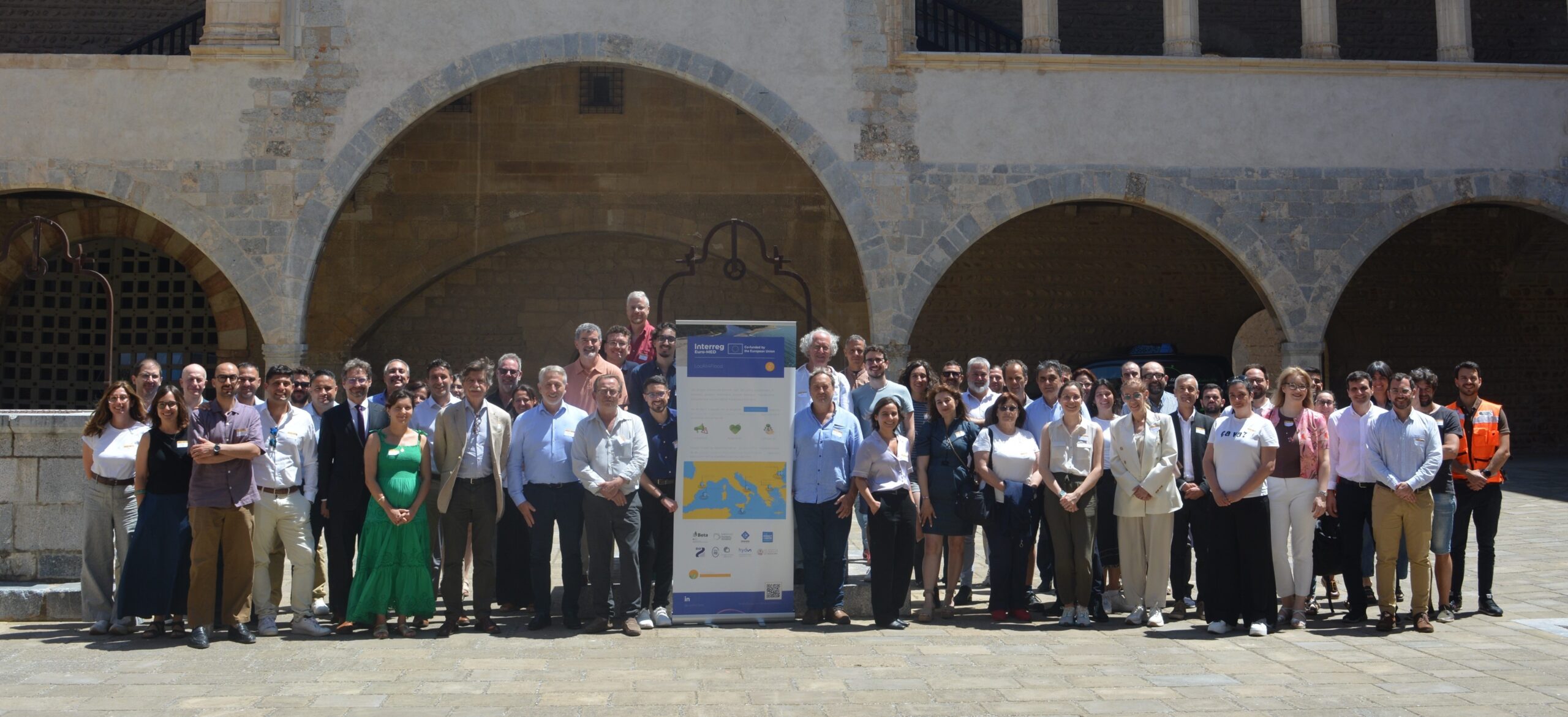
Flash floods are a common risk in the Mediterranean basin. A transnational vision is the best way of dealing with this risk, by sharing knowledge and learning from each other’s experiences. This is the purpose of LocAll4Flood, based not only on geographical openness, but also by bringing together different types of organisations (research centres, universities, companies, public authorities, etc.), each with complementary skills.
PARTNERS

BETA Technological Centre (Spain)
The Technological Centre in Biodiversity, Ecology and Environmental and Food Technology (BETA) was created in 2014 with the aim of boosting research activity in the field of environmental technologies at the University of Vic – Central University of Catalonia. BETA operates in three strategic areas. The main area is focused on the development of technologies that can manage, treat and recycle different types of waste produced by livestock farming or industrial activities. The second area is linked to the study of aquatic and terrestrial ecosystems. The last area focuses on the management of soils and fertilisers in order to improve the sustainability of agricultural practices. BETA Centre has been involved in many European projects.
As the main partner in LocAll4Flood, BETA Technological Centre is in charge of the partnership coordination, but also tests the solutions developed within the project in a Catalan catchment. Besides, it plays an important role in the conception of awareness actions.
Euroregion Pyrenees Mediterranean (France/Spain)
The Euroregion Pyrenees Mediterranean is a transnational entity with a European legal structure (European Grouping of Territorial Cooperation). Created in 2004, the Euroregion represents the Autonomous Communities of Catalonia and the Balearic Islands in Spain and the Occitanie Region in France. The aim of the Euroregion is to facilitate cooperation between these territories on either side of the Mediterranean and the Pyrenees, and one of the best ways to achieve this is to implement European projects, contributing to the realisation of the Euroregion’s roadmap for the period up to 2030.
The Euroregion leads LocAll4Flood communication activities and works on the transfer of the project results at Mediterranean level.

GLOWATER – University of Balearic Islands (Spain)
GLOWATER is a research group of the University of the Balearic Islands, focused on water resources and global change. Therefore, the main study lines of GLOWATER are the water management in touristic areas, the geo-environmental processes and ecological dynamics using remote sensing techniques and the Mediterranean hydro-climatic interactions and fluvial ecology. GLOWATER has a long experience of participation in European projects and benefits of the University of Balearic Islands expertise in geomorphological impact of flash flood and stakeholders’ perception of flood risk.
GLOWATER is responsible for testing LocAll4Flood’s solutions in two catchment areas in Mallorca and focuses in particular on citizens’ perception of risk.
Energy and Water Agency (Malta)
The Energy and Water Agency (EWA) is the government agency responsible for developing national policies on energy and water in the Maltese islands. Hence, EWA is in charge of the implementation of the EU Water Framework Directive and the Floods Directive. The agency has an extensive hydrological monitoring programme which provides detailed data on rainwater runoff and flood levels in the downstream sections of representative catchments. As a competent authority, the EWA is used to consultation procedures with the general public and stakeholders, while developing educational activities for the community.
The EWA tests LocAll4Flood solutions in two Maltese catchments and promotes the project results within the Euro-MED Programme framework.


Black Sea – Danube Association for Research and Development (Bulgaria)
The Black Sea – Danube Association (BDCA) is a non-profit research organisation that gathers academics, industrialists and individuals engaged in water and environmental issues from the perspective of nature-based solutions. BDCA seeks to strengthen links between business and research in a variety of environmental fields: coastal and marine management, river management, flood risk management, climate change mitigation, the blue economy, sustainable fisheries, etc. BDCA is also familiar with European and international projects, particularly in the field of flood risk mitigation.
As part of the LocAll4Flood project, BDCA applies the solutions developed within the project in two Bulgarian catchments and leads the development of a training programme on flooding, a core component of the project governance model.
National Research Council (Italy)
The Water Research Institute (IRSA) is an operative body of the National Research Council of Italy. The main activity of this structure is to provide innovative tools for the rational use and protection of water resources. The current research programme is designed to provide decision-making methods for surface and groundwater resources in a context of climate change. The Institute has long experience on the field of water scarcity and drought, as well as in other risks such as flooding.
In the LocAll4Flood project, IRSA leads the testing of LocAll4Flood model on an Italian catchment. Furthermore, it collects and analyses Nature-based Solutions to mitigate flash floods and establishes a participatory approach methodology to define the most locally suited solutions.


Hydrometeorological Innovative Solutions (Spain)
Hydrometeorological Innovative Solutions (HYDS) is a SME based in Barcelona, founded in 2006 thanks to the support of Polytechnic University of Catalonia. The HYDS capabilities cover the entire chain of requirements for the products offered by the company in a context of advanced software development. HYDS’ hydrometeorological products are required by entities such as water agencies, meteorological services and local authorities, mainly for warning systems.
HYDS develops an early warning system tool and tests it in all the LocAll4Flood pilot catchments by integrating local data.
Aristotle University of Thessaloniki (Greece)
Aristotle University of Thessaloniki (AUTh) is the largest university of Greece. AUTh has a strong experience in both national and European funded research projects related to digital and informatics modelling of hydrodynamic circulation, waves and storm surges for the assessment of climate change impacts on coastal areas, and for operational sea state forecasting in coastal areas. It also has a significant expertise in the Mediterranean and Black Seas.
AUTh is a key contributor to the testing of LocAll4Flood’s flash flood prevention, adaptation and mitigation solutions in a Greek catchment.

City of Sarajevo (Bosnia and Herzegovina)
Sarajevo is the capital of Bosnia and Herzegovina. The City has a wide range of statutary responsibilities, including urban development, environmental protection and strategic planning. The urban area of Sarajevo is at risk of flooding, and the City therefore wishes to equip itself with tools that improve its climate resilience whilst supporting sustainable development. Sarajevo has already participated in numerous European and international projects.
The City of Sarajevo is joining the LocAll4Flood project during the transfer phase in order to deploy the Integrated Multi-Stakeholder Governance Model – developed and tested in several pilot catchment areas – to the Miljacka river catchment.
Shabla Municipality (Bulgaria)
Situated on the Black Sea coast, Shabla is Bulgaria’s easternmost municipality. Shabla Municipality has local responsibilities for infrastructure, environment, economy and social services. Its territory is at risk of flooding, both from rivers and the sea. Consequently, the municipality is committed to risk management and also has experience in international cooperation on climate adaptation and environmental protection.
Shabla Municipality is joining the LocAll4Flood project during the transfer phase in order to implement the Integrated Multi-Stakeholder Governance Model – developed and tested in several pilot catchment areas – in the Shablenska river catchment.